THE PALINTONOS BOW IN THE ILIAD
The Palintonos Bow in the Iliad: Technology, Weaponry, and Symbolism
In the Iliad, Homer frequently uses the epithet palintonos toxon (παλίντονος τόξον) to describe the bows wielded by famous archers. Translated literally as “bent-back” or “recurve” bow, this term refers to a sophisticated piece of ancient military technology: the composite recurve bow. While close-quarters combat with spears and swords dominated the heroic ideal of Trojan battlefields, the composite bow occupied a unique, highly specialized status in both warfare and narrative symbolism.
Engineering and Mechanics of the Recurve Bow
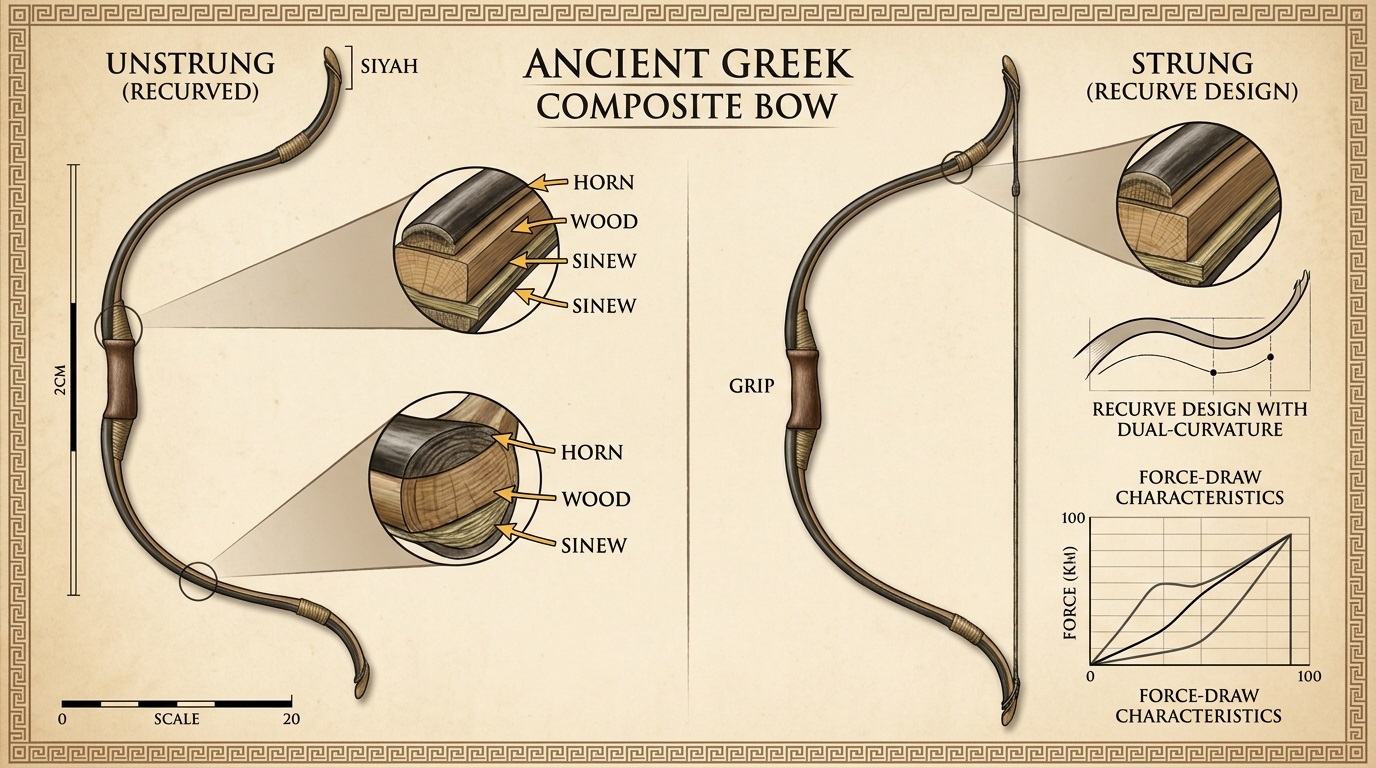
Unlike a simple wooden self-bow carved from a single piece of timber, the palintonos was a composite weapon constructed from wood, horn, and animal sinew.
Unstrung State: In its relaxed position, the limbs of the bow curved naturally forward, away from the archer, forming a reverse C-shape or a highly exaggerated curve.
Stringing and Tension: To string the bow, the archer had to bend the limbs back against their natural orientation. This process required immense physical strength and technical skill.
Energy Transfer: Store-and-release mechanics made this design exceptionally powerful. Bending the horn on the inner side (compression) and stretching the sinew on the outer side (tension) allowed a shorter bow to store far more potential energy than a straight wooden bow, yielding superior range and armor-penetrating power.
Due to the complex manufacturing process and vulnerability to moisture, composite bows were expensive, high-status items reserved for elite marksmen or leaders.
Analysis of the Bow in the Iliad: Pandarus and Apollo
Homer provides a detailed account of the bow’s construction in Book IV during the description of Pandarus, a Lycian archer fighting for Troy. Pandarus’s bow was crafted from the sixteen-span horns of a wild ibex, joined together by a skilled artisan and tipped with gold fittings.
The weapon plays a pivotal role in two contrasting contexts within the epic:
The Treacherous Shot: Pandarus uses his composite bow to shoot Menelaus from afar, breaking a solemn truce between the armies. This reinforces the aristocratic disdain for archery, viewing the bow as a weapon for ambushes that avoids the honorable risks of hand-to-hand combat.
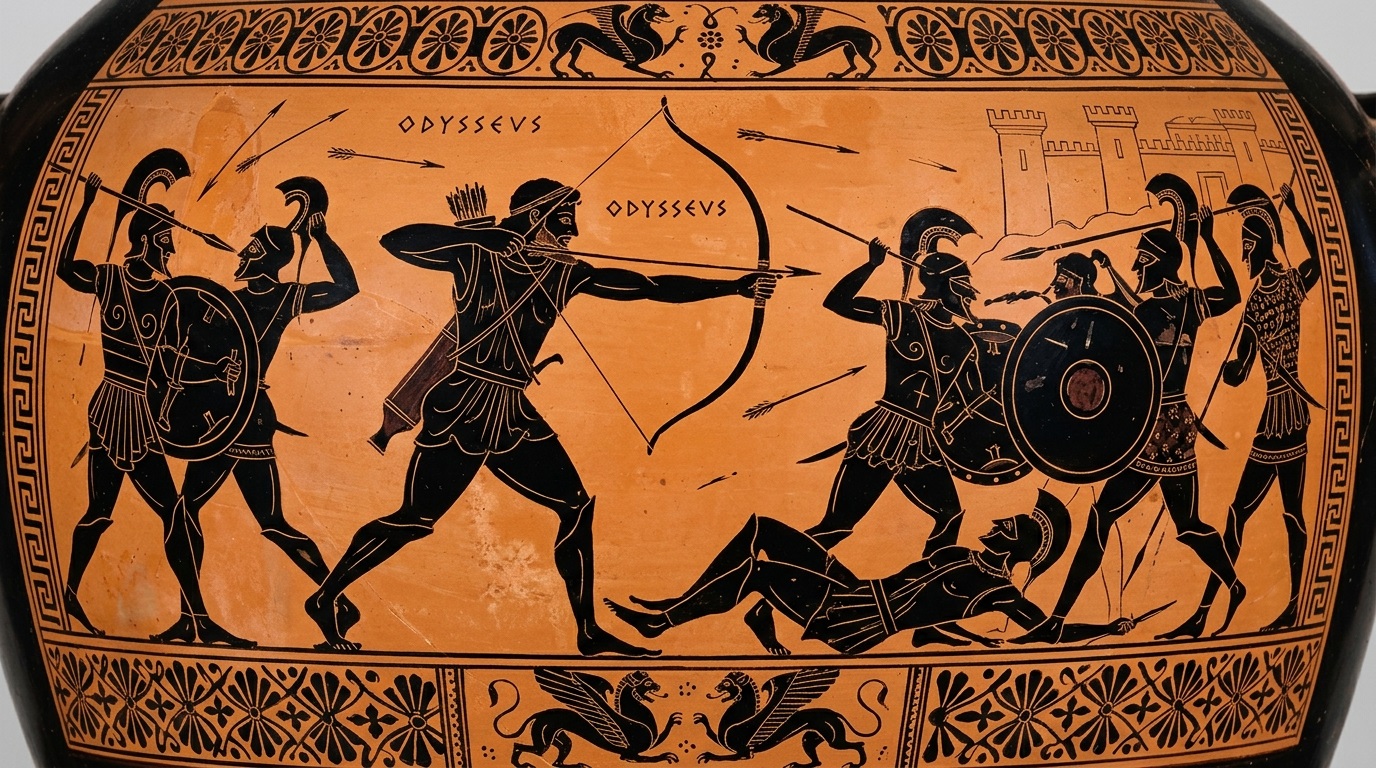
Divine and Regal Power: Conversely, the bow is also the primary weapon of Apollo, the god who strikes from afar, and later serves as the ultimate test of kingly authority in the Odyssey. When drawn by a legitimate hero or deity, the force required to bend the recurve bow symbolizes supreme physical strength and divine favor.
Symbolism of Structural Tension
The physical nature of the palintonos bow serves as a visual and conceptual metaphor. Later Greek philosophers, such as Heraclitus, referenced the tension of the bow string and limbs to illustrate the harmony of opposites: a structure defined by opposing forces pulling against each other to create unity and energy.
In Homeric epic, the recurve bow represents the intersection of craftsmanship, lethal distance, and latent power. It stands as a testament to the advanced engineering of the ancient Mediterranean and remains one of the most vividly described objects in classical literature.